Dissecting the Soul of the Caribbean
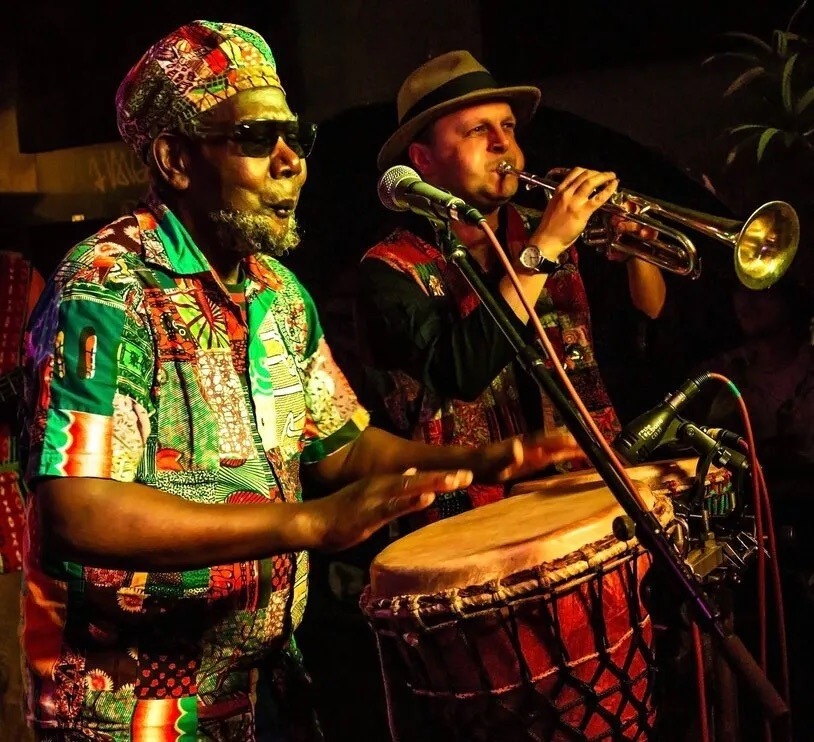
1. "Guyana Way" by Simeon Raywaram (Guyana)

I hear they just making roads and bridges, but they fly flying green and loud / Talk is the currency, words they trade, they promise we better pay / But when we ask them for action, dare I say, we get a parade
The oil, the gold, the glory / Still can't define we soul / Our character is our treasure...
Looking closely at the lyrics, Simeon Raywaram’s “Guyana’s Way” is a patriotic song that hides social commentary next to national pride.
Raywaram’s “Guyana Way” honours Calypso tradition, because on one hand, it is an anthem of national pride, celebrating a modern Guyana built on “oil and rice, to timber” where “milk and honey flowing each day.”
However, true to the West Indian kaiso spirit, the Junior Calypso Monarch victor slips in witty political commentary that holds a mirror up to the country’s rapid development. He directly targets the political class, noting that while infrastructural progress is everywhere (“We’re fixing roads, we’re fixing bridges”), the average citizen is still waiting for substantial economic relief (“they promise we better pay / But when we ask them for action… we get a parade”).
The song is a reminder that Guyana’s value is in its human values, such as patience, its multi-ethnic harmony, and its unbuyable spirit (“The Spirits cannot be bought… our character is our treasure”).
2. "Welcome to Jamrock" by Damian Marley (Jamaica)

Built on a hitting sample of Ini Kamoze’s 1984 reggae classic “World-A-Music”, Damian Marley's 2005 “Welcome to Jamrock” features an earth-shaking bassline paired with an aggressive modern hip-hop drum knock, creating an imposing sonic sound that demands your attention from the moment the first beat drops.
Welcome to Jamrock, camp where the thugs dem camp at /...them ah playboy, ah playboy rabbit / So nuh bodah pose tuff if you don't have it / Old man to Pickney, so wave unnuh hand if you with me
With “Welcome to Jamrock”, Damian shatters the sun-drenched tourism board image of Jamaica sold to international consumers. He delivers a front-line piece of investigative musical journalism that exposes the reality of political corruption, poverty, and ghetto warfare in Kingston (“Some boy nuh know dis, dem only come around like tourist... And don't know the real hardcore.”)
By blending his father’s redemptive roots philosophy with the cadence of modern dancehall, Jr. Gong acts as an urban prophet. He forces the listener to look past the beautiful beaches and confront the human struggles of the working class (“To see the sufferation sick me… to win election dem trick we, Then dem don't do nuttin' at all. “Welcome to Jamrock” stands as a timeless anthem of socio-political awareness, proving that reggae’s revolutionary spirit is alive and well.
3. "Sycamore Tree" by Lady Saw (Jamaica)
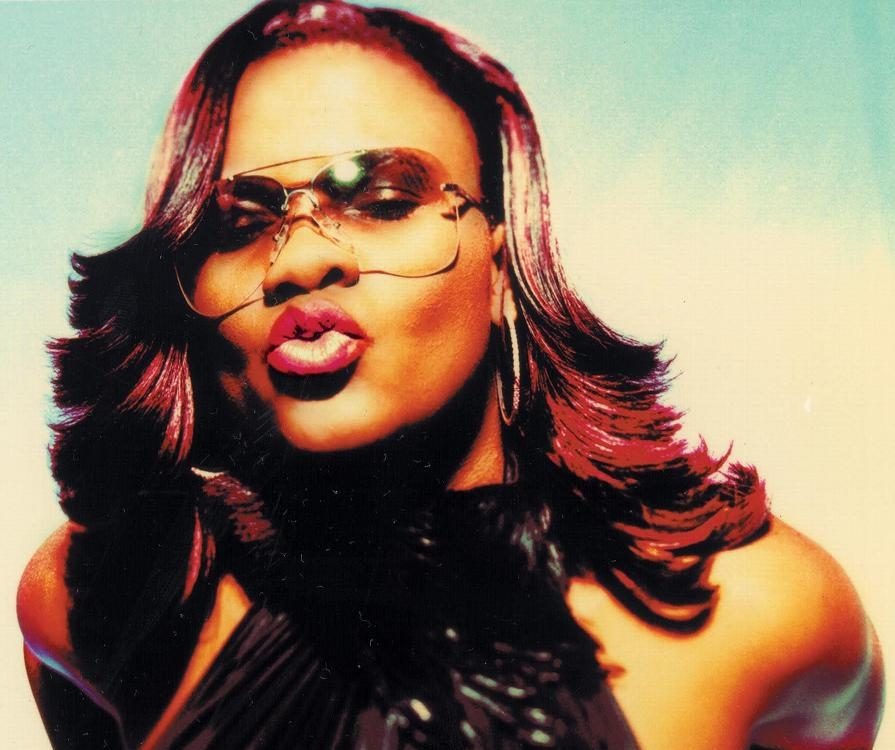
Built on the Joyride riddim (1996) produced by Dave Kelly, “Sycamore Tree” features a bouncy bassline and a looping wind-instrument effect that leaves enough space for her razor-sharp vocal delivery.
Remember it was under the sycamore tree
A bwoy waan mi bow
An mi tell him fi flee
Remember it was under the sycamore tree
The sun stop shining for me
Mi love yuh but mi still have mi pride... / An mi a gal whey guh a mi church every week / So mi naw mek nuh bwoy tun mi inna freak
Call mi old fashion a nuh everything mi like / Mi a gal wi ride pon yuh big Ninja Bike... / But a one mic mi chat pon, ah mi studio mic
In the 1990s, Marion Hall, operating under her stage name Lady Saw, walked into a hyper-masculine, often violent patriarchal dancehall arena and claimed the “Queen of Dancehall” crown by being fiercer, rawer, and more lyrically gifted than her male peers. In “Sycamore Tree”, she addresses a rooted dancehall taboo head-on by rejecting a lover’s demand to “bow” (a Jamaican Patois term for performing oral sex, which is a stigmatised act in Jamaican street culture).
What makes the song amazing is the duality of the Caribbean psyche that Lady Saw puts on display. She refuses to be boxed in and rejects the idea that a woman must be passive or submissive to be decent. She brags about her passion and independence (“mi a gal wi ride pon yuh big Ninja Bike”), yet she guards her moral boundaries, pride and Christian heritage (“mi a gal whey guh a mi church every week”).
Lady Saw calls out and commands solidarity from working-class women across Kingston garrisons (“Big up di gal dem from Dunkirk and South… Junglist and Rema gal”), building an anthem of collective female agency, showing that liberation means setting your own terms on the street, in the church, and in the studio.
4. "Blessed" by Shenseea ft. Tyga (Jamaica)

Shenseea takes the foundational defiance laid down by Lady Saw and adapts it for the 2020s digital age. She pairs an ingrained Caribbean practice of waking up and instantly giving praise to God (“First thing in the mornin’... Thank God for life”) with a confident mantra of self-love and sexual agency. She explicitly tells the listener that her blessings are tied to her independence, her refusal to conform (“Never had to pretend... Never, ever beg friend”), and her international hustle (“Mek me tek dis bloodc**lt worldwide”).
Pairing a dancehall drum pattern with a glossy, international pop-trap bassline, “Blessed” is engineered to move audiences from a Kingston street dance to a global music festival.
First thing in the mornin' when I wake up / Thank God for life, look in the mirror, say / B*tch, I'm the best... Way too blessed...
Keep hatin' from the side, side, side / Mek me tek dis bloodcl**t worldwide, wide / Never had to pretend-tend-tend... Never, ever beg friend
If Lady Saw had to draw boundaries in the sand to claim her respect, Shenseea steps into the arena unburdened by the need for external validation. “Blessed” perfectly captures the multi-dimensional psyche of the younger Caribbean generation.
The song opens with the traditional West Indian home custom of starting the day with spiritual gratitude to the Almighty (“Thank God for life”). Yet, in the very next breath, Shenseea pivots in a hyper-confident statement of self-worth and unfiltered sexual liberation (“look in the mirror, say... B*tch, I’m the best”).
She bypasses conservative respectability constraints by boasting about her financial autonomy, her refusal to cater to fake social circles (“never, ever beg friend”), and her mission to push Jamaican culture onto the global stage (“worldwide”), defining the modern hustle. Shenseea proves that a woman can be grounded in faith, independent, and unapologetic about her power all at the same time.
5. "Splinters" by Shal Marshall (Trinidad and Tobago)

In cultural journalism, we often talk about music reflecting sociology, but “Splinters” highlights the meaning of unapologetic revelry as a release valve, something just as vital to the Caribbean identity.
When Marshall sings about “total disorder” and leaving “no behaviour,” one would think he is describing simple lawlessness, but the truth of the matter is, he is capturing the mechanics of carnival catharsis, where society’s class structures, anxieties, and rules are intentionally shattered for a few hours so the human spirit can reset.
Oi, wi doh hav no behaviour / Total disorder... / Cyah play mas if yuh fraid powder / Everybody know every time wi touch down / It's splinters, dance mashup
Doh dig no scene if I drunk an ting / No stush vibes, no modellin / Pure bacchanal, pure revellin
“Splinters” is driven by a soca riddim engineered to create immediate movement in a large crowd. It is a manifesto for the liberating space in West Indian culture, such as the road march or a cruise. When Marshall declares a state of “total disorder” and chants “wi doh hav no behaviour,” he is tapping directly into the root of Carnival. It is the ritualistic shedding of respectability politics and societal expectations. The song explicitly commands listeners to reject being “stush” (acting snobbish or overly elite) and to stop “modellin” (standing still to pose or show off). “Splinters” demands a descent into “pure bacchanal”.
For a working class dealing with daily stress, economic worries, political or racial divides, the instructions in “Splinters” to get covered in paint and powder (“cyah play mas if yuh fraid powder”) act as a great equaliser. When the song “touches down”, it blows inhibitions into literal splinters. Strangers become family, decorum vanishes, and for the duration of the song, euphoria becomes the highest law of the land.
6. "Open Up" by Samuel Medas (Guyana)

Samuel Medas (one of Guyana’s most celebrated modern musical exports) takes the explosive acoustic machinery of a Carnival road march, the military-style commands, and the percussion and redirects the energy toward a spiritual experience. When he sings “Open up the gates and let the King come in”, he is using the same phrasing a Soca artist uses to demand a stadium gate open for a truck, but he is transforming it into a prayer of worship.
Attention, everyone! Attention! Move it! The General is coming! ...Open up the gates and let the King come in! Open up the gates and let His Majesty come in!
Tell me, who else you know is lord of an angel army? / Who else you know turn bastards into family? / He takes His love and make it a banner flying over me!
In the Caribbean, the line between the sacred and the secular is famously thin, but Samuel Medas erases it in “Open Up”. The song represents the cultural phenomenon of modern Caribbean Gospel Soca. Medas masterfully hijacks the syntax of a Carniavl road marshal (“Attention! Move it! The General is coming!”) and flips the script to describe the arrival of the divine.
Instead of singing about a sound system truck crashing through a fete gate, Medas is demanding entry for “His Majesty”. He blends the metaphorical language of the old-school Caribbean church (“Purify us… Cleanse us with your fire”) with the street-smart vernacular (“turn bastards into family… declare yes when all the man say no”).
He uses Guyana’s distinct, soulful vocal styling over a high-octane pace, showing that spirituality in the West Indies doesn’t have to be quiet or Europeanised. It can be loud and triumphant.
Post a comment